

The A of Action in STARR: How to Explain What You Actually Did
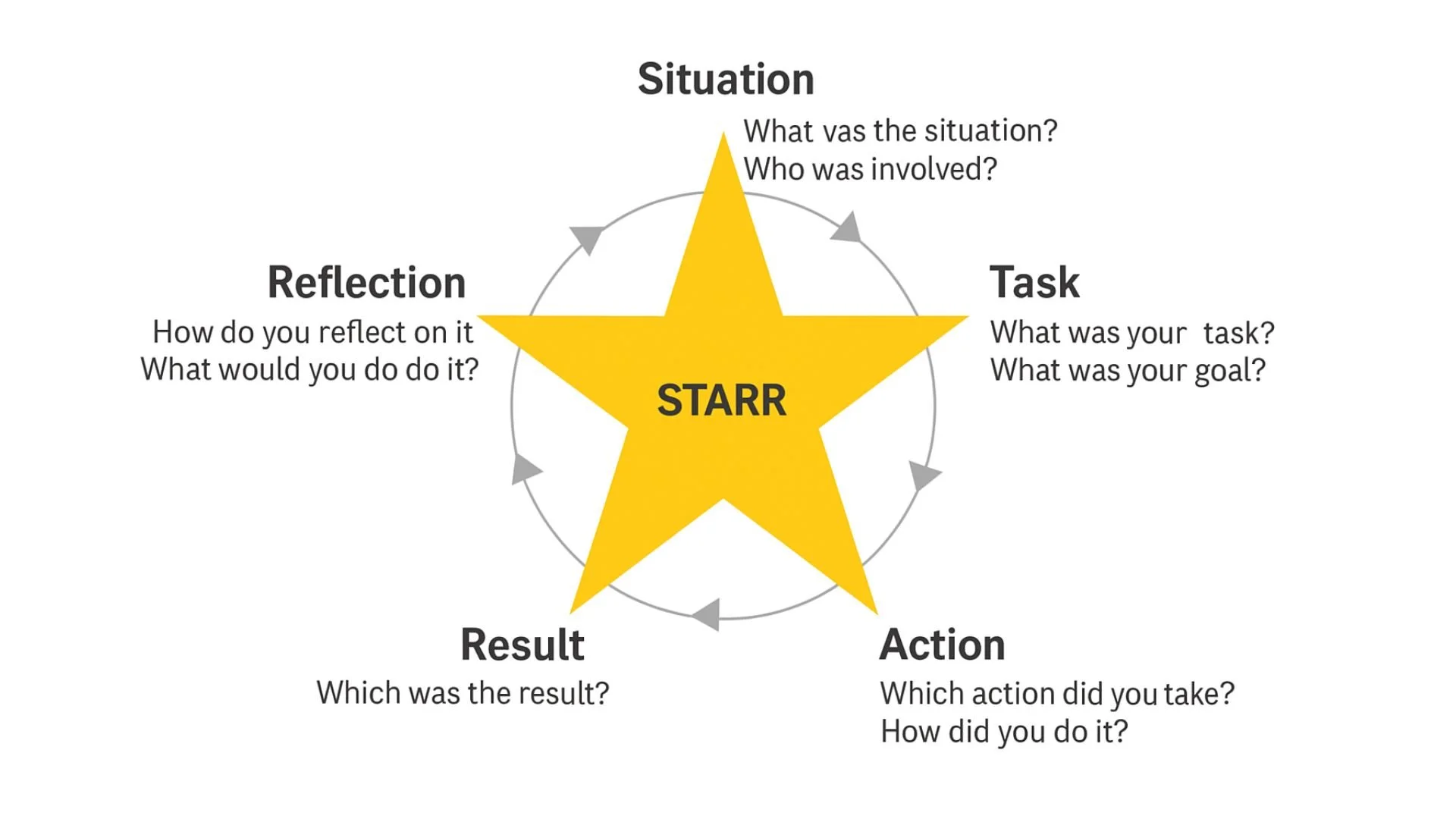
The A of Action might be the most nerve-racking part of the entire STARR method. Because this is the moment where you explain what you actually did. You personally. Not your team, not “we,” not “the organisation.” Just you. And yes, that can feel a bit like putting yourself on a stage with a spotlight on you. But hey—better that than having a recruiter think: “Nice story, but what did you actually do?”
In this blog, you’ll learn how to describe the A of Action clearly—no vagueness, no fluff, and without sounding like an overconfident peacock.

What the A of Action Actually Means
The A of Action is all about your approach. The behaviour you showed. The steps you took to address a situation or reach a goal.
This is not about the result, and not about your task. It is purely about your decisions and your solution.
Think of it like this: the T (Task) is the stage decor, but the A (Action) is the choreography. This is where you show how you move and operate.
Why So Many Candidates Stay Hopelessly Vague Here
You’ll probably recognise this, you’ve heard it from others or maybe even said it yourself: “We handled that together,” or “I was responsible for communication.” Sounds professional. Says absolutely nothing. You might as well say you “did something with people.” Recruiters hear this and think: “Okay, great, but what did YOU do?”
It’s not that you’re telling it wrong, you’re just not telling enough. And that’s where things easily go wrong, because a recruiter or hiring manager wants to know what you bring to the table and how you work. On the other hand, if you only talk about your individual achievements, you risk sounding a bit too confident. Somewhere between those two extremes lies the sweet spot.
How to Describe Strong Actions That Make an Impression
Strong actions are concrete, logically structured, and show your competencies without you having to spell them out. A recruiter should almost be able to replay your story like a scene from a script.
Think about:
which steps you took
why you made those choices
how you worked with others
The more concrete you are, the stronger your example becomes. Keep in mind: the person sitting across from you has no idea who you are or what you do. It’s tempting to skip steps because things feel obvious to you, but the recruiter doesn’t live in your head. At the same time, you don’t want to drown them in unnecessary details. Balance is key.
Examples of Strong and Weak Actions
Let’s start with a not-so-strong example: “I helped organise the event.”
Sounds fine, but as a recruiter you still have no idea what someone actually did. Did you count chairs? Make sandwiches? Unload helicopters? No clue.
So what is a strong example? Something like this: “I created the planning, maintained weekly contact with suppliers, and solved last-minute changes to ensure the event went smoothly. I built the planning by aligning with stakeholders, I blocked time in my agenda for supplier check-ins, and those last-minute changes… well, those require some improvisation.”
See the difference? The last person does things. A recruiter can visualise exactly how you work. And that’s the goal. But remember: the person you’re talking to wasn’t there. So they might still want to know:
What last-minute changes came up? How could they have been prevented?
Who were your stakeholders? What were their interests? How did you make final decisions?
What did you discuss with suppliers? How did you communicate with them? How did you choose the right ones?
Checklist: Is Your Action Clear Enough?
Ask yourself these three questions when preparing your examples:
Could you draw your Action on a whiteboard?
Is your role clearly separated from what others did?
Can a recruiter see exactly which competencies you demonstrated?
If the answer to all three is yes, you’re good. If you hesitate, rewrite the action as if you’re explaining it to someone who has no idea what your job is. Think of that aunt who hasn’t seen you in four years at a birthday party.
The Difference Between Task and Action in STARR
The T of Task and the A of Action often get mixed up in job interviews, but they mean two very different things. The task explains what was expected of you, your responsibility, your assignment, your role. It’s the setting of the story: “This was my role, this is what I had to achieve, this was my part of the project.”
The action describes what you actually did. This is the heart of your example: How you made decisions, which steps you took, why you approached it the way you did, and which concrete actions made the difference. The action is not repeating your job description, it’s showing how you executed it.
And that’s why the a is far more important than most people realise. The task tells the recruiter what you had to do. The action shows how you work in real life. And since projects rarely go exactly as planned, recruiters want to know what happens when real-life chaos joins the party. That’s what they’re evaluating.
The Action Is Your Stage
When you use the STARR method in your interview, the A of Action is the moment where you show what you’re capable of. So be concrete, be clear, and most of all: be yourself, but in 4K resolution. And yes, this can be tricky when you’re not used to it, so of course we’re happy to help. You can book a free intake or sign up for a training right away.
