

The R of Result in STARR: the part where almost everyone stumbles and you won’t
Introduction: why the result is the real star of the show
The S, T and A are basically the opening act. Necessary, useful, sometimes even entertaining, but no one buys a ticket for the soundcheck. Everything builds up to the result. And that’s exactly where many candidates do something that makes recruiters shed a tiny silent tear: they stay stuck in the Situation, Task and Action… and barely mention the result. A shame, because this is where you show your impact. What your actions actually achieved. Why you’re such a strong candidate.
And yes, it can feel tricky, because it has to be concrete, and measurable when possible, but without sounding like someone who would give themselves a statue for their own birthday.

What result really means in STARR
The R of Result is about what your actions produced. Not what you hoped for. Not what others did. Not what “the team accomplished together.” No. What changed because of you?
You can describe this in terms of:
Time faster, sooner, shorter, more efficient
Money saved, revenue increased, costs reduced
Efficiency fewer errors, smoother processes, clearer communication
Impact happy stakeholders, solved problems, better collaboration
Recruiters love this part. Not necessarily because they’re obsessed with numbers although… some are but because your result shows that you understand the value of your work. You’re not only supposed to be a good team fit, you’re supposed to be good at the job. And this is where you show exactly what value you added.
Why many candidates mess this up
Here are the three most popular ways to completely ruin your Result:
Hiding it: “And then it was solved.”
By whom? How? What changed?
Keeping it vague: “The project went well.”
What impact did you make? What did your work achieve?
Overdoing it: “I managed the entire organisation from start to finish.”
Alone? Really? No delegation? No team? Are you secretly fourteen people?
How to formulate a strong Result without sounding arrogant
You want a version that is concrete, accurate and, where possible, measurable. And yes, a little humility is good, but don’t make yourself invisible because you’re afraid of sounding braggy. Here are some guiding questions that help:
What changed because of your actions?
What does success look like in this example?
Can it be measured time, money, efficiency?
How did the organisation, team or stakeholder notice the difference?
How did stakeholders respond?
And remember: the result is not a list of new tasks. It is the effect created by your behaviour.
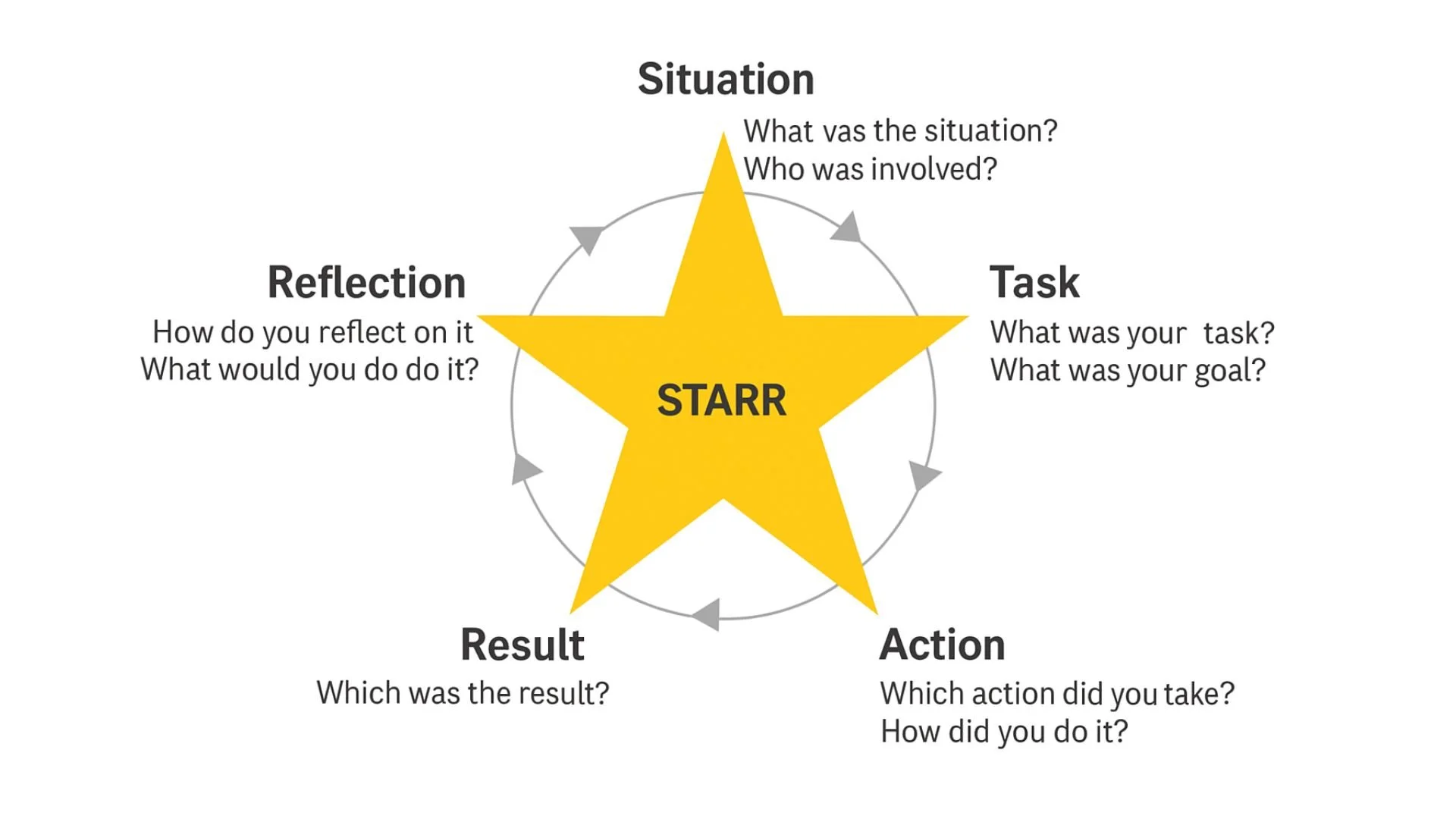
Examples: weak vs strong Results
Weak example: “The project was completed successfully.”
This is like saying you ate dinner but not mentioning what. Helpful? Not really.
Strong example: “The project was delivered three weeks earlier because I streamlined the review process you have already explained the actions. This saved €12,000 in external hours, and the client complimented us on the clarity of the communication.”
Short, concrete, measurable and not chest-thumpy.
The magic of the final R: Reflection
A result without reflection can make it seem like everything went perfectly. And let’s be honest: that has never happened in the history of human employment. Reflection completes the STARR method because it shows that you understand what worked, what didn’t and how you can repeat or improve it.
In reflection, you show:
what went well and you will repeat next time
what you would do differently
which competencies you developed
how you can achieve the result again or refine it
This ties everything together, because you link success to growth. Recruiters and managers love candidates who want to grow.
Result is your impact, so tell it wisely
The r of result is where you show what you’re worth. Not by inflating your ego but by making your impact clear and concrete. Don’t skip it, don’t rush through it, and definitely don’t keep it vague. And if you’re thinking “Yes great, but I still get stuck in the STA part”, then you’re of course welcome to work with us. You can book a free intake or jump straight into a training.
