

The Situation in STARR: how to lay the foundation for a strong answer
You probably know the feeling. You are in a job interview and the recruiter asks for a concrete example of a situation where you solved a problem, achieved something, or learned a valuable lesson. And that is where it all begins: the S in STARR, which stands for Situation. This is the moment to set the scene. Not with a long story, but with just enough detail to show what was going on.
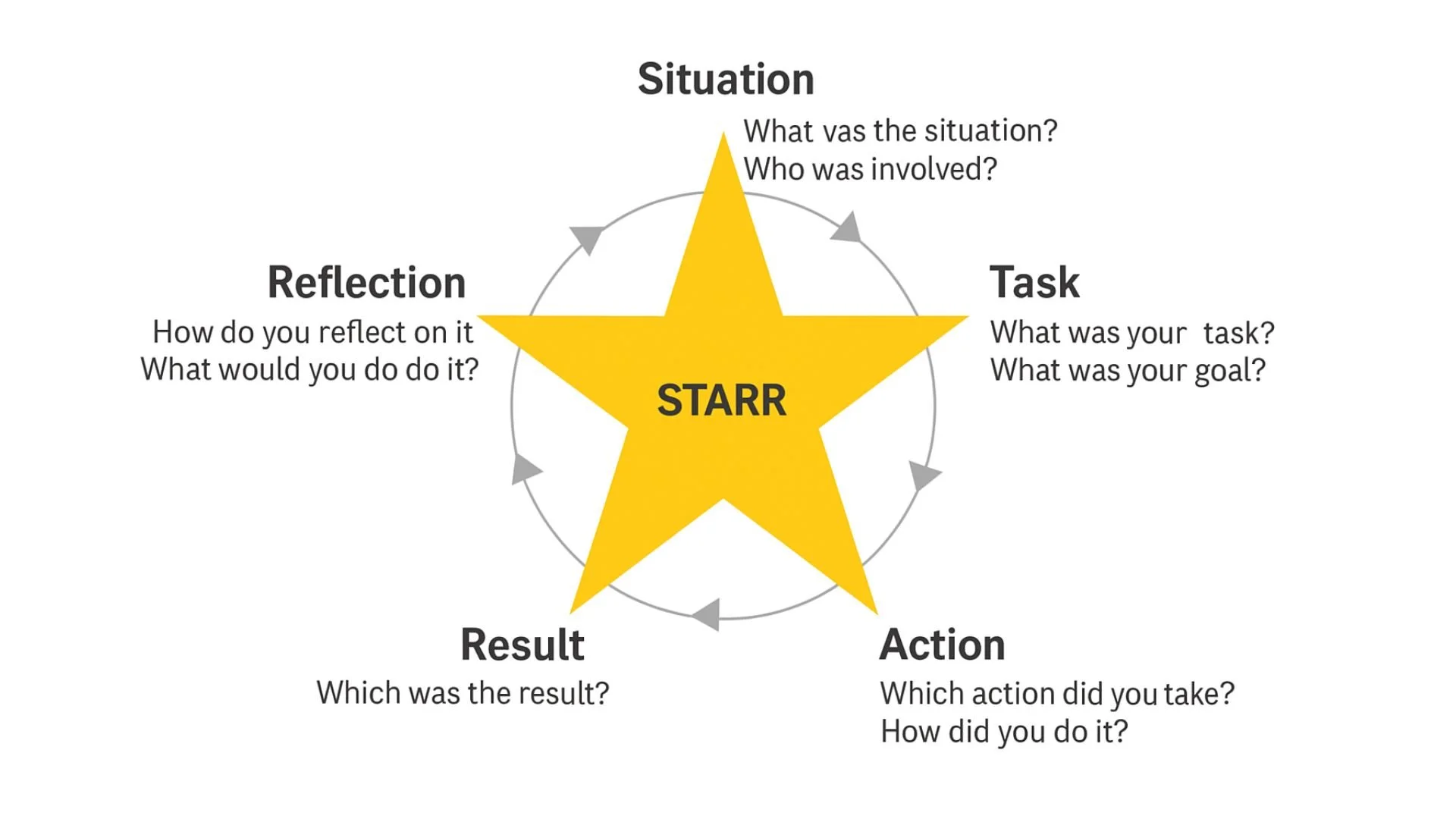
What do they mean by the “situation”?
The situation is the starting point of your example. You briefly explain where you were, what was happening, and why it mattered. Think of questions like:
Where were you working at the time?
What exactly was going on?
Why was it a challenge or an important moment?
A good answer to the S helps the interviewer understand the context in which you acted. It is the backdrop of your story. Without that context, the listener cannot see what was really at stake.
How specific should you be?
Keep it short but clear. Mention the team you were working with, the type of project, or the situation that occurred. You do not need exact dates or job titles, but it should be clear what kind of setting you are describing.
For example: “During my time as a project coordinator at a software company, I worked on launching a new client portal. We were on a tight deadline because the launch had to align with a marketing campaign. Halfway through the project, one of our key developers fell ill, which put us behind schedule and created tension in the team.”
Or: “I was working as a team lead in hospitality when our location got a new manager with a completely different approach. Within a week, the schedule, responsibilities, and even how we handled complaints all changed. Many colleagues became frustrated and motivation dropped quickly. I decided to meet with the team to discuss what they needed to feel heard again.”
In these examples, you make the story tangible and concrete. You want to avoid rambling for minutes and losing your listener, but you also want to include enough context. As a rule of thumb, aim for about three to five sentences when describing the situation.
A common mistake: staying too vague
Many candidates get stuck in generalities. Saying “We had a busy period” or “There were some problems in the team” does not say much. The interviewer wants to understand your role in a specific, relatable situation. So take time to prepare your example properly, practice it by discussing it with someone you trust, and after the interview, reflect on how it went and what you could improve.
One down, four to go
The S in STARR is the first step and it is all about context. Briefly explain where you were, what was happening, and why it was important. That way, you give the interviewer a clear picture of the situation in which you demonstrated your skills. Next will be the task. Would you like to practice this or discover where your challenges lie? Schedule a free intake or book a training right away.
