

How to Recognize Competencies in a Job Description
You probably know the feeling. You read a job posting and think, “Yes, this sounds like me.” Until you keep reading and stumble upon sentences like “We are looking for a real team player who is result oriented.” Sounds good, but what do they actually mean by that? Competencies are rarely listed explicitly in a job description, yet they determine whether you truly fit the role. Once you learn to recognize them, you will understand much better what an employer is really looking for and how to tailor your application accordingly.

What exactly are competencies?
We have written an in depth blog about this, but here is a quick recap. Competencies are the combination of knowledge, skills and behavior that you show in your work. Knowledge is about what you know, skills are about what you can do, and competencies are about how you put that into practice.
Take “collaboration,” for example. It is not just about being able to discuss things with others, but also about listening, taking initiative and resolving conflicts. Competencies therefore say something about the way you work, not just about what is listed on your CV.
Commonly requested competencies in job descriptions include:
Strong communication skills
Analytical ability
Result oriented mindset
Resilience under pressure
Working independently or in a team
Where to find competencies in a job description
Job postings are a bit like treasure maps. If you know where to look, you can find things others might miss. Competencies are often hidden in three main places:
In the role description: “You easily switch between different departments.” This points to communication skills and flexibility.
In the list of requirements: “You work accurately and pay attention to detail” refers to precision and delivering quality.
In the company culture section: “We are looking for someone who takes initiative” or “a colleague who gets energy from teamwork” says something about proactivity and team spirit.
These words are easy to overlook and often sound vague, but together they reveal exactly what kind of behavior an employer expects.
How to break down a job description step by step
Recognizing competencies in a job description is a small analysis in itself. Here is how you can do it:
Read the text once in full. What kind of person are they describing?
Highlight words that describe behavior or attitude. Think of independent, solution oriented, customer focused, flexible.
Translate vague terms into concrete competencies. “Hands on mentality” might refer to decisiveness, “able to bring people along” might point to leadership or empathy.
Choose the three to five most important competencies. Those form the core of what they are truly asking for.
One last example. “You enjoy taking responsibility and keeping an overview during busy periods.” This points to self management, stress tolerance and organizational ability. You can tell a lot from a single sentence once you know what to look for.
Use that knowledge in your application
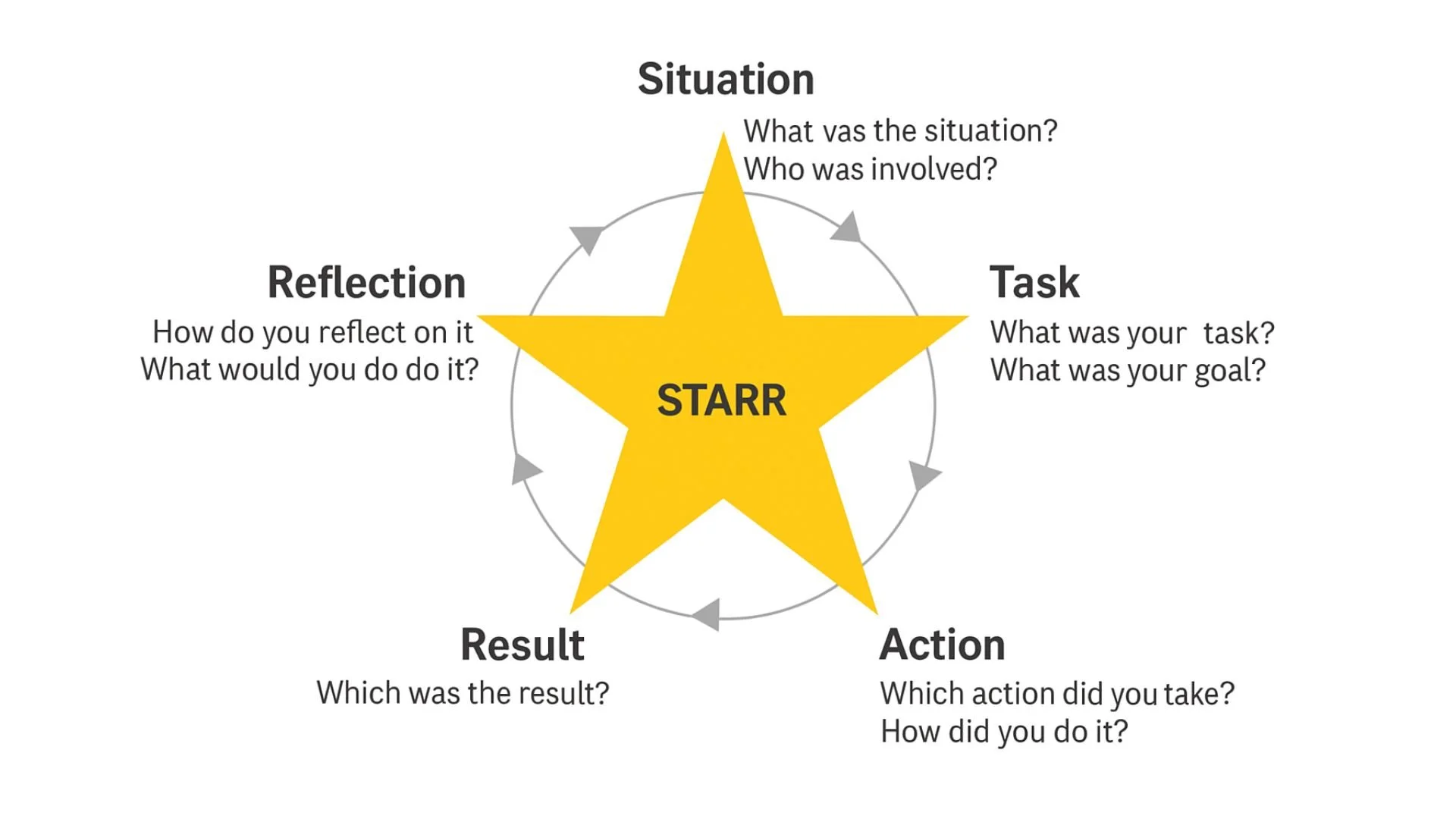
Once you have identified the key competencies, you can use them to prepare and present yourself with confidence. Avoid generic statements like “I have strong communication skills” and give a concrete example instead using the STARR method. That way, you directly connect the competencies to your own experience, which sticks much better with a recruiter. We also have a detailed blog about that if you want to dive deeper.
On to your next interview
Job descriptions can seem like a maze of nice sounding words, but between the lines you can find everything you need to know. By recognizing competencies, you learn not only what is being asked, but also why.
So next time you read a job posting, grab a highlighter or open a note, and break the text down as if it were a puzzle. The more often you do this, the quicker you will see where your strengths truly lie and you can apply with confidence.
Still struggling to recognize the competencies? No problem. Already spotting them but not sure how to explain why you excel in them? That is normal. Book a free intake with us or sign up directly for a training session.
