

The Task in STARR and how to show exactly what your role was
You have clearly set the situation. The interviewer now knows where you were, what was going on and why it mattered. Time for the second step in the STARR method: the T for Task. This is the moment where you explain what your responsibility was in that situation. It answers the question of what was expected from you and why you played an important role in that moment.
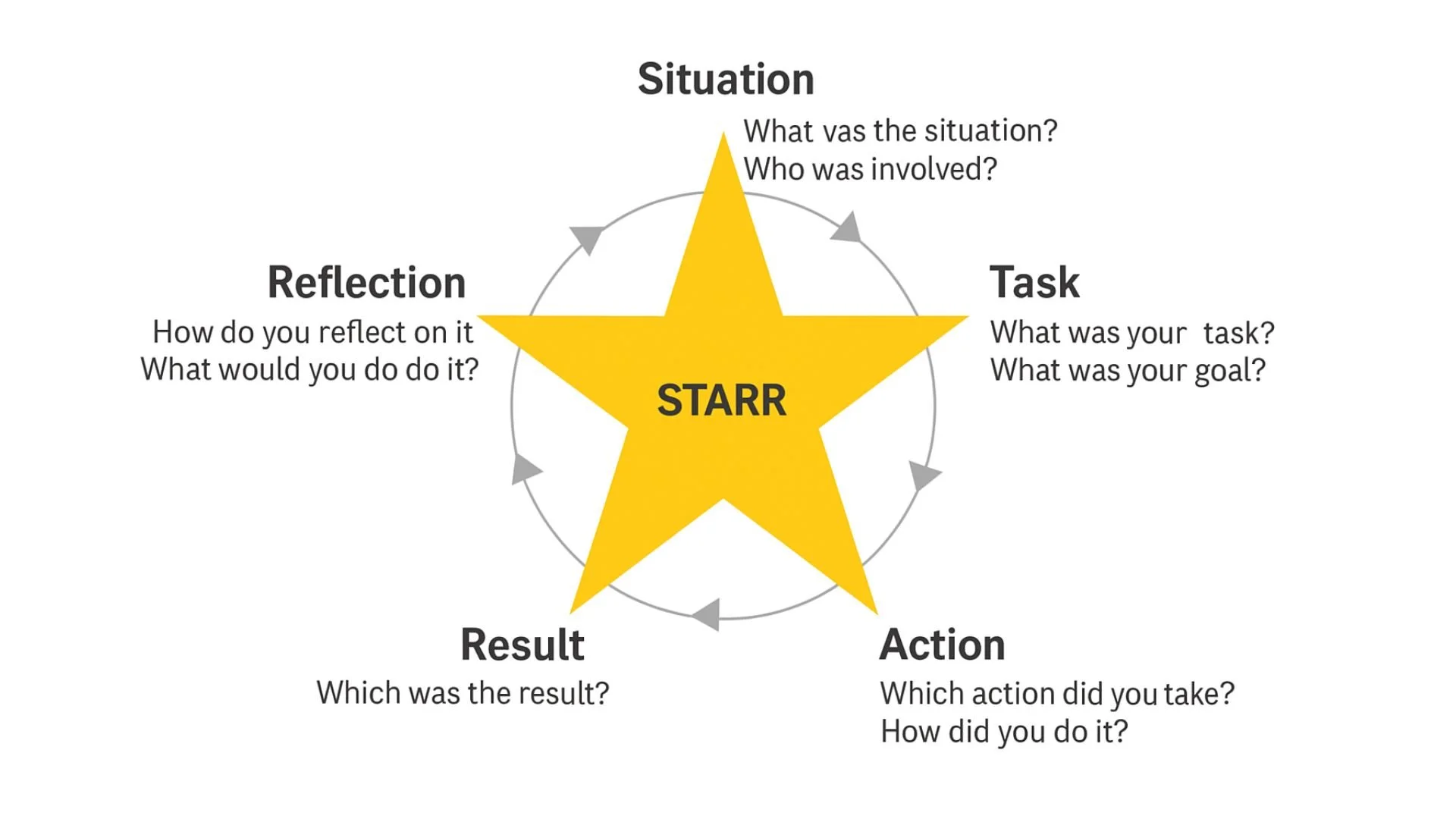
What do we mean by the task
The task is about your specific assignment or responsibility. You do not describe what the whole team had to do but what your part was. This gives the interviewer a clear grip on your role in the bigger picture. Think of questions like:
What was your assignment, goal or responsibility?
What was expected from you at that moment?
What role did you have within the team or within the project?
The task forms the bridge between the context and your action. Without this step the interviewer cannot understand what you contributed or what you were being assessed on. Be specific here because the interviewer wants to understand what you actually did.
How clearly do you need to describe your task
Be concrete and to the point. You do not need to list your entire job description. Pick only the part that directly relates to the example so the interviewer knows exactly what your task was. For example:
“My task was to make sure all technical requirements were delivered on time and that communication between the developers and marketing ran smoothly.”
Or:
“As a team leader it was my responsibility to keep the team motivated and provide clarity about the new way of working. I needed to make sure everyone knew what was expected of them.”
This makes your specific responsibility clear without going on for too long. You share just enough for the interviewer to understand where your role began and ended.

A common mistake: making the task too broad
A familiar and very common pitfall is that candidates describe their task too generally or too widely. “I was responsible for the entire project” sounds impressive but is usually not realistic and definitely not concrete. The interviewer wants to know what you had to do specifically. Another mistake is skipping the task entirely and jumping straight to the action. This leaves out the context that explains why your approach made sense or why it was effective.
We advise keeping the task to a few sentences at most. Enough to make your responsibility clear without revealing the whole story before you even reach the action. The task is the foundation on which your actions will be evaluated. When you explain your assignment clearly the interviewer understands why your choices were logical and which skills you applied.
On to step three
With the T for Task you have made it clear what you were responsible for. This creates the perfect bridge to the A for Action, where you show how you handled that responsibility in practice. Want to practice this or discover where your challenge lies in describing your task or action? Schedule a free intake or book a training session.
