

Applying with confidence: how to use the STARR-method
You know the feeling. You’re in a job interview and the recruiter smiles and asks: “Can you give me an example of a time you resolved a conflict in your team?” Bam. Your heart skips a beat. Where do you even start? You’ve experienced plenty, but how do you share it in a way that’s clear, structured, and actually makes an impact? How do you remember everything on the spot without having a photographic memory? That’s where the STARR-method comes in handy. STARR stands for:
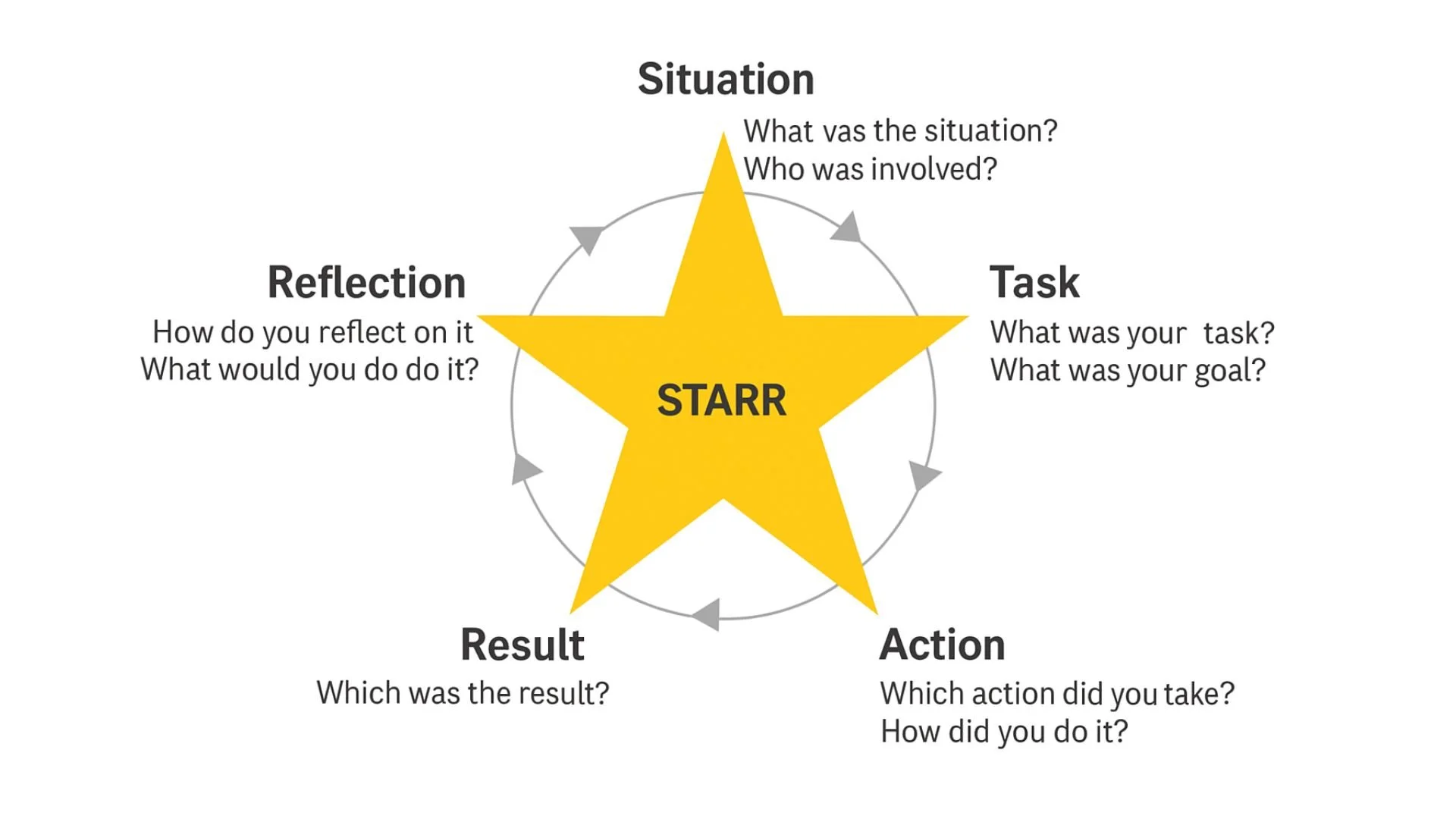
What is the STARR-method?
Glad you asked. The STARR method is a simple way to structure your answers to competency-based interview questions. Recruiters use this method because they want to know how you’ve handled real situations in the past, not just what’s written on your CV.
By using STARR, you keep your story short, clear, and focused. It helps you stay on track, highlight your personal contribution, and show that you reflect on your experiences; exactly what recruiters and hiring managers love to hear.
Why recruiters rely on STARR
Many candidates struggle to back up their experience effectively. They share too many details, lose the thread of their story, or focus mostly on what the team did instead of their own role. Understandable, nerves can make that worse. But that’s also how you miss your chance to stand out.
The STARR method helps you to:
give your answer a clear beginning, middle, and end
highlight your personal role and actions
show awareness and growth through reflection
This gives recruiters exactly what they need: insight into what you did, how you did it, and what you learned. That’s what helps them picture you in the role — not just as a résumé, but as a person.
Example 1: resolving conflict
Question: “Can you describe a time when you resolved a conflict?”
Situation: During my internship, my team had to meet a tight deadline, but two colleagues disagreed on the approach.
Task: I was responsible for planning and knew we needed a quick decision.
Action: I spoke with each colleague separately, summarized their views, and then organized a short meeting to discuss pros and cons together.
Result: Within half an hour, we reached a compromise and hit the deadline without extra stress.
Reflection: I learned that listening and summarizing often works better than pushing your own solution. It’s something I still apply in conflicts today.
Example 2: taking initiative
Question: “Tell me about a time you took initiative.”
Situation: At my part-time retail job, I noticed customers kept asking the same questions, which caused longer queues.
Task: As a cashier, I wasn’t directly responsible for customer information, but I wanted to improve the experience.
Action: I suggested creating a small leaflet with FAQs and designed a quick draft myself.
Result: My manager loved it, had it printed, and customers appreciated it, queues got noticeably shorter.
Reflection: I discovered that small initiatives can make a big impact. Since then, I’ve been more confident sharing ideas, even beyond my job description.
These are just examples, of course you should reflect your own experiences. Try to keep each STA R answer to 3–5 sentences per letter. That’s long enough to be complete, but short enough to stay engaging.
Practicing the STARR-method
The beauty of STARR is that you can apply it almost anywhere: at work, during your studies, in volunteer projects, or even in sports. Write out your story in 15–25 sentences. It helps you focus on the essentials. Once you’re happy with it, read it out loud or practice with a friend who can ask you typical behavioral interview questions. The more you practice, the more natural it feels and the calmer you’ll be when it counts.
Common mistakes (and how to avoid them)
Giving too many details → Keep it short and concrete.
Talking only about your team → Recruiters want to hear about your role.
Skipping reflection → Show what you learned — that’s where the magic happens.
Ready to apply with confidence?
The STARR method isn’t a trick to memorize, it’s a tool to help you tell your story clearly and confidently. With practice, you’ll come across as calm, self-assured, and convincing; exactly what you want in an interview. Need help preparing your STAR stories or want personalized feedback on your interview skills? At Nexie, we’re here to help you stand out with practical tips or a free CV scan. Let’s make sure you walk into your next job interview with confidence and clarity.
